
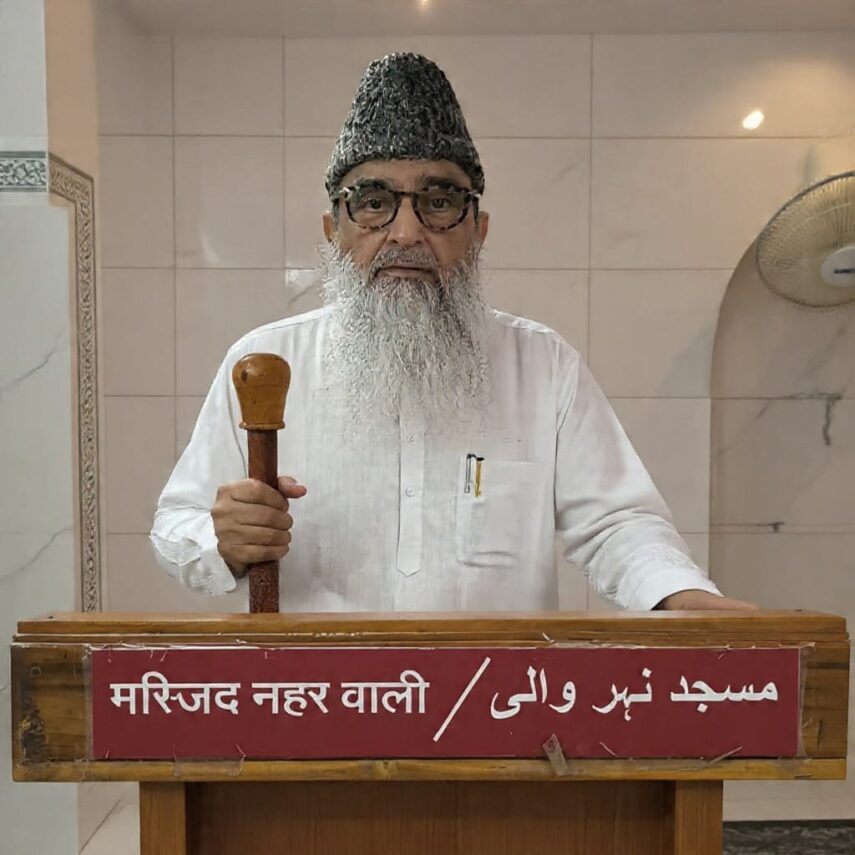
Special Friday sermon at Masjid Nehar Wali highlights the importance of reading; appeal to establish libraries in Muslim localities and support Urdu newspapers
Agra: Imam Mohammad Iqbal, Khatib of Masjid Nehar Wali, expressed concern over the declining reading habit in Muslim society during his Friday sermon and said that the community would not regain its respect until it returned to books and knowledge.
He said that the first command revealed to the Muslim community was “Iqra” — meaning “Read.” However, it is unfortunate that the same community today appears to be falling behind in the habit of reading.
Referring to the Quranic verse, “Iqra bismi rabbikalladhi khalaq” — “Read in the name of your Lord who created” — Mohammad Iqbal said that Islam gives great importance to knowledge, reading, reflection and learning.
He observed that Muslim localities today have numerous restaurants, food outlets and shops, with people showing considerable enthusiasm for different types of food. However, finding a proper library in many Muslim neighbourhoods can be difficult.
Need to reconnect the younger generation with books
Imam Mohammad Iqbal clarified that Islam does not prohibit eating and drinking, but teaches moderation and discourages excess and wastefulness. Quoting the Quran, he said:
“Eat and drink, but do not exceed the limits. Indeed, He does not like those who exceed the limits.”
He said the progress of any community depends on education, knowledge and reading. If children and young people are not encouraged to develop a reading habit, future generations may fall behind in intellectual and educational fields.
He also expressed concern over the increasing amount of time young people spend on mobile phones, entertainment and other unnecessary activities.
Appeal to establish libraries
Mohammad Iqbal appealed to people and organisations to take the initiative to establish libraries in Muslim localities. He said it was not necessary to begin with a large library; even a small collection of good books, newspapers and magazines could serve as a starting point.
He suggested gradually adding religious, historical, educational, literary and social-reform books to such libraries.
He also appealed to parents to connect their children with books and create an atmosphere of reading and learning at home.
“Who will keep Urdu journalism alive if we do not buy Urdu newspapers?”
During his sermon, Mohammad Iqbal also drew attention to the condition of the Urdu language and Urdu journalism.
He said people often express concern over the decline of Urdu, but hesitate when it comes to spending even a small amount on buying an Urdu newspaper.
He questioned, “If we do not buy Urdu newspapers ourselves, then who will keep Urdu journalism alive?”
He stressed that speeches alone cannot promote or preserve the Urdu language. Buying, reading and sharing Urdu newspapers are also important ways of supporting the language and Urdu journalism.
“We must become heirs of books, not merely of food”
Concluding his address, Imam Mohammad Iqbal said that meaningful change in society would come only when an environment of reading was created in homes, mosques, madrasas and neighbourhoods.
He urged parents, teachers, social organisations and community leaders to take practical steps to connect the younger generation with books, knowledge and research.
He said, “We have to become heirs of books, not merely of food.”
He appealed to philanthropists and social organisations to come forward and establish libraries in their respective areas so that children and young people could be connected with books, pens, knowledge and intellectual development.
— TIMES OF TAJ