By Prof. Jasim Mohammad
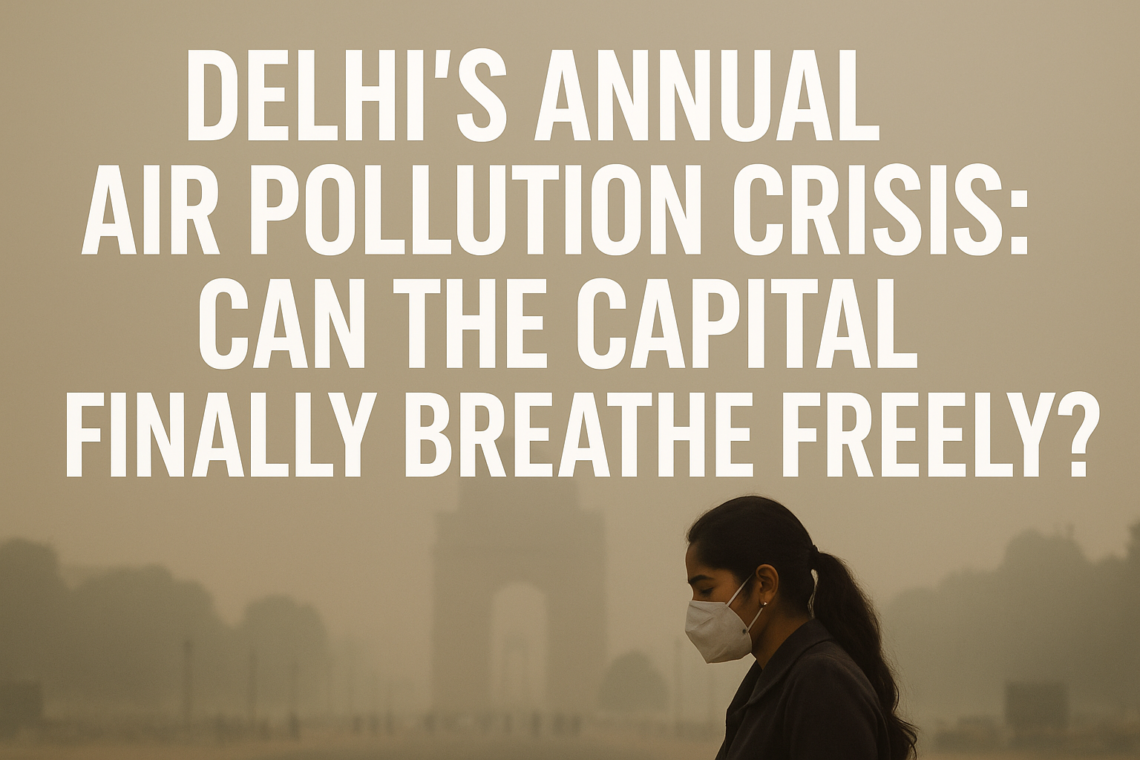
Delhi is once again struggling to breathe, and this year, the danger feels heavier than ever. Thick, toxic air has transformed daily life into a health risk, with over two lakh people suffering serious respiratory issues in just a few major hospitals. Recent air-quality readings have frequently fallen in the “very poor” and “hazardous” categories, signaling a persistent threat to health, comfort, and confidence in the city’s future.
The causes of Delhi’s smog are familiar: Diwali fireworks, stubble burning in neighbouring states, slow winter winds, and dropping temperatures. Yet, the city continues to treat these recurring events as normal — a dangerous acceptance that leaves residents unprepared. Conflicting pollution readings from official and independent monitors further complicate the situation, making it harder for people to protect themselves effectively.
Children, the elderly, pregnant women, and outdoor workers bear the brunt of this toxic air. Studies link prolonged exposure to PM2.5 particles with diabetes, heart disease, memory decline, and shortened lifespan. These effects are silent and cumulative, making the crisis even more insidious.
The recent high-level review on December 3, 2025, chaired by Union Environment Minister Shri Bhupender Yadav, highlighted the urgency of action. States in the NCR were instructed to accelerate the implementation of annual action plans. Key measures include road repair, dust control, construction waste management, strict industry compliance, smart traffic solutions, expanding public transport, greening urban spaces, and tackling stubble burning. The government also emphasized emissions monitoring, pollution enforcement, and reviving eco-clubs in schools.

Experts note that blaming farmers alone for stubble burning is unfair. Effective solutions require cross-border cooperation between Delhi, Punjab, Haryana, and the Centre, with support for farmers to manage crop residue sustainably. Within Delhi, diesel vehicles and generators continue to pollute, highlighting the need for a shift to electric vehicles, improved bus networks, and restrictions on older vehicles.
Medical preparedness is equally crucial. Hospitals see surges in patients during pollution spikes, and doctors need updated guidelines, equipment, and support for pollution-related illnesses. Simple advice like staying indoors or buying air purifiers is insufficient, particularly for outdoor workers and schoolchildren. Community-level protections — clean rooms in schools, free masks for workers, and health camps in vulnerable areas — are essential.
Transparency and public engagement can also drive change. Real-time AQI dashboards, updates on hospital cases, and clear progress reports on pollution-control measures can empower residents to make informed choices and hold authorities accountable.
Pollution is not just a health issue — it carries a heavy economic cost. Sick workers, school absenteeism, lost productivity, and rising healthcare expenses underline the urgency. Clean air is an investment in the city’s future. Resident groups, NGOs, and volunteers must join the government in awareness campaigns, monitoring, and support initiatives.
A city cannot claim modernity if its people cannot breathe safely. Bold, decisive action by Delhi’s leaders can safeguard public health and leave a lasting legacy. Delay, on the other hand, risks perpetuating a preventable disaster. Delhi must act now to ensure its citizens can once again breathe freely, live healthier lives, and walk under clean skies.