Report. S. Muneer
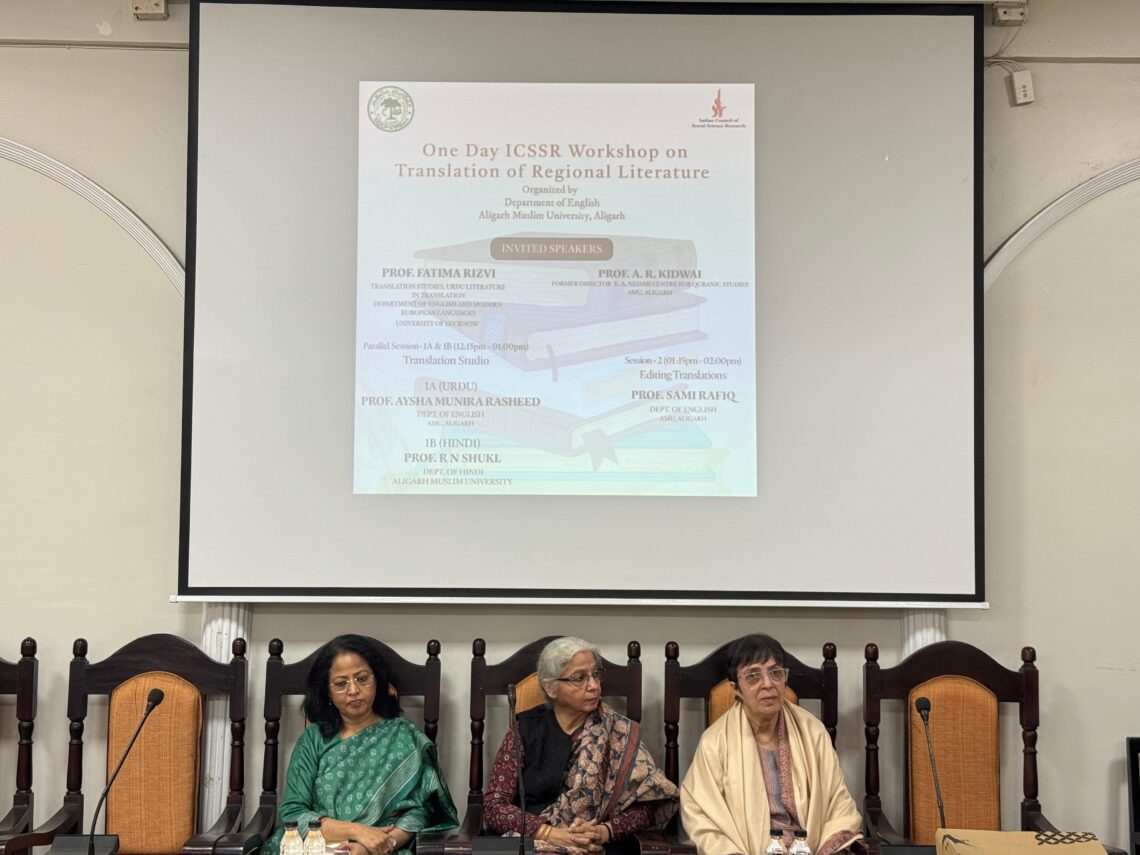
Aligarh:The Department of English, Aligarh Muslim University (AMU) organised a one-day Workshop, under the ICSSR Project Translating Regional Language Environmental Literature into English, on “Translation of Regional Literature”, which aims to bridge linguistic and cultural divides, promote advanced translation scholarship, and preserve regional literary traditions.
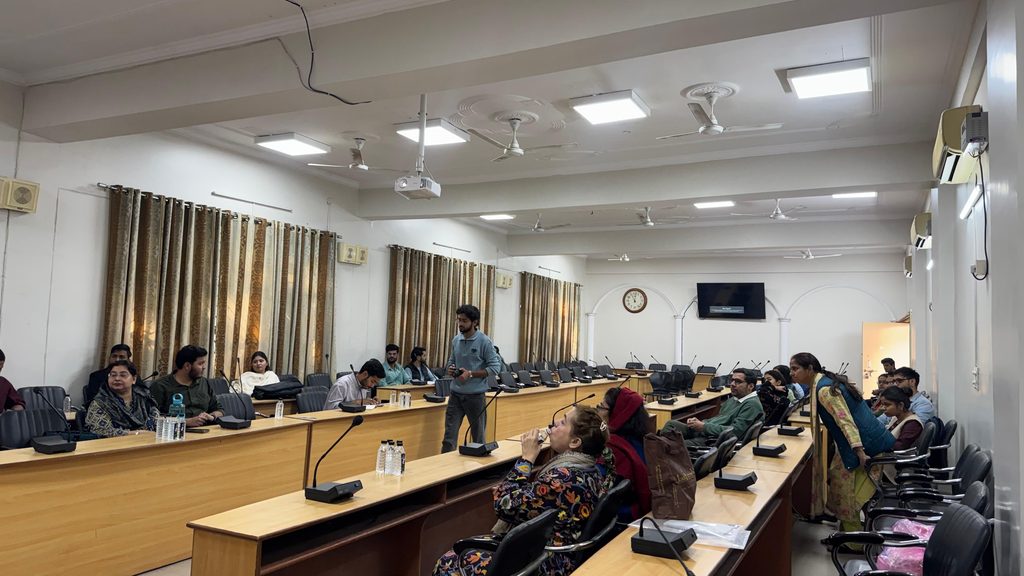
In her welcome address, Professor Sami Rafiq, Project Director, Department of English, A.M.U. shed light on the heritage and the seeds of translation that were sown in India. Prof Rafiq also shared her thoughts on the background and present workings of the project, how regional languages contribute to the literary canon of the nation through translation, how translation provides new interventions in other domains such as Law and sciences, and explained the relevance of translation studies, which serves as the bridge between language and culture. She further discussed how the workshop sessions will be conducted by the resource persons from different linguistic experiences and expertise.
Professor Shaheena Tarnnum, Chairperson, Department of English, A.M.U., shared her thoughts on conceptualising the workshop themes and aims, which sought to highlight the literary culture from the periphery of the nation. She stressed the concerns of the workshop that it is socially relevant, inclusive, learner-empowered, and provides equitable opportunities for classroom teaching and learning. She also shed light on how the syllabi of the department have incorporated translation studies in its undergraduate and postgraduate programmes to continue the culture of translation.
Professor Fatima Rizvi, Department of English and Modern European Languages
University of Lucknow, presented her thoughts on translation under the title “Interpreting Cultures and Experience Dynamics: Translation as Negotiation”. While talking about her phases of learning and the experience of translation, Prof. Rizvi posed questions for the attendees, such as “What is translation?”, “What is an act of translation?”, “What are the difficulties of translation?”, “How does the degree of literary devices such as irony change in translation?” and “How does translation help in addressing new readership?”. While outlining the history of translation in the subcontinent and its status in contemporary India, she also discussed notions like “intralingual”, “intracultural”, and “bhasha translation”. Her lecture also addressed east-west literary culture interplay while mentioning Faiz Ahmed Faiz through the lens of translation. She said, “Any translator who approaches translation is very likely to bring in his or her personal experience; every translation is an act of personal experience also and the politics of the translator”. She further shared her experience of translating and reading Qurat-ul-Ain Haider’s Urdu stylistics, which carried lengthy sentence structures and complex linguistic and artistic ideas. She concluded her lecture with her thoughts on “Poetry and Translation” while stating, “Any translation exercise with poetry is an intricate one…main ye khaas tour se urdu translation ke liye bol rahi hoon, kyunki radeef, qafiya sabh replicate karna bohot mushkil hai”.
Delivering the lecture, Professor A. R. Kidwai, Director, K. A. Nizami Centre
for Quranic Studies, congratulated the organising committee for continuing the tradition of translation on campus. He stated, “Translation is a travelling text, moving across civilisation”. He discussed how translation introduced Islam to the West through the translation of the Quran. His talk highlighted the historical significance of translation and its impact on the West, while mentioning how the early 19th century witnessed the introduction of characters like Aladdin through Alif Laila. He said, “We, being students of literature, should feel proud of how translated texts bring civilisations together”. He also advised students to look at the role and responsibilities of a translator, keeping in mind the term “Traduttore, traditore”, which translates to “Translator, traitor”.
The inaugural session commenced with the recitation of the verses from holy Quran by Bilal Hasan and the moderation was done by Mahvish Arif.