Report: Shozab Muneer
Students’ Struggle Succeeds, Yasir Fahad’s Hunger Strike Ends; Questions Raised Over Administration’s Delay in Accepting Legitimate Demands
After a continuous 19-day protest by students at Aligarh Muslim University (AMU), the administration was finally compelled to accept their demands. Under pressure from the students, the administration not only announced the schedule for the Students’ Union elections for the academic session 2026–27 but also accepted the demand for a change of proctor. The Students’ Union elections will be held on November 5. This development is being regarded as a major victory for the protesting students. However, a question remains: why did the administration wait for a 19-day-long protest before accepting demands that it eventually agreed to fulfil?
According to the announced schedule, the respective deans will display the voter lists at 10 a.m. on October 26. Applications for corrections to these lists can be submitted until 2 p.m. on October 27, while the final voter lists will be issued at 4 p.m. on the same day. Candidates can submit their nomination papers at the Students’ Union office from 10 a.m. to 1 p.m. on October 29. Scrutiny of the nomination papers will take place at 4 p.m. that day. Candidates can withdraw their nomination papers from 10 a.m. to 1 p.m. on October 30, while the list of candidates whose nominations have been declared valid will be released at 4 p.m. on the same day. Serial numbers will be allotted to candidates at 10 a.m. on October 31, and the final list bearing these numbers will be published at 4 p.m. The candidates’ final speeches will be held at the Union Hall from 2 p.m. on November 3.
Voting will take place in the respective faculties on November 5, from 9 a.m. to 5 p.m. There will be a lunch break from 1 p.m. to 2 p.m. Vote counting will begin at 7 p.m. and continue until the results are declared. The venue for vote counting will be announced later. Professor Javed Talib of the Department of Law has been appointed Chief Election Officer to conduct the Students’ Union elections. Professor Nazia Hasan of the Department of English at Women’s College has also been appointed Chief Election Officer for the Women’s College Undergraduate Students’ Union elections.
The 19-day student protest at AMU ended on Friday, October 9, after the university administration accepted all the demands. The protest also included an indefinite hunger strike by postgraduate student Yasir Fahad. The students’ key demands included holding Students’ Union elections and replacing the proctor. Following the administration’s acceptance of these demands, the students decided to call off the protest. Thus, after a prolonged struggle, the students succeeded in getting their major demands accepted.
Vice-Chancellor Professor Naima Khatoon visited the protest site, met the students and ended Yasir Fahad’s hunger strike by offering him juice. On the occasion, she appreciated the students’ peaceful and democratic approach and reaffirmed the university’s commitment to their welfare. Professor Naima Khatoon told the students that their protest had been democratic, peaceful and based on principles, and that it had resulted in success. However, this success has also raised questions about the university administration’s approach. The demands for holding Students’ Union elections and replacing the proctor were ultimately accepted, but the students had to protest for 19 days to get them resolved. During this period, Yasir Fahad also continued an indefinite hunger strike. The question is: if the students’ demands were legitimate and acceptable, why did the administration not accept them in time and try to resolve the matter earlier? Was a protest and a hunger strike necessary for the students’ voices to be heard? The administration’s approach has also sparked debate about the relationship of trust between the students and the university.
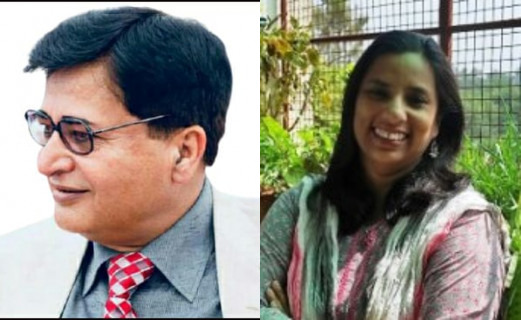
The administration has accepted the students’ two major demands: announcing the Students’ Union elections at AMU and replacing the proctor. Professor Mohammad Nafis Ahmad Ansari of the Department of Political Science has been appointed the university’s new proctor. He will take over from Professor Mohammad Naveed Khan of the Department of Business Administration. Alongside the appointment of Professor Javed Talib as Chief Election Officer for the Students’ Union elections, Professor Nazia Hasan has also been appointed Chief Election Officer for the Women’s College Undergraduate Students’ Union elections.
Yasir Fahad and other protesting students expressed satisfaction over the resolution of the issue. After the protest ended, the students voluntarily vacated the protest site. Those present on the occasion included Pro-Vice-Chancellor Professor Mohammad Mohsin Khan, Registrar Professor Asim Zafar, DSW Professor Athar Ansari, Proctor Professor Mohammad Nafis Ahmad Ansari, Controller of Examinations Professor Mujeebullah Zuberi, Vice-Chancellor’s OSD Professor Asfar Ali Khan, Election Officer Professor Javed Talib, Cultural Education Centre (CEC) Coordinator Professor M. Rizwan Khan, OSD Selection Committee Professor Sarwar Umar, Member In-Charge of the Public Relations Office Professor Vibha Sharma, Chairperson of the Department of Linguistics Professor M. J. Warsi, Finance Officer Noor Islam, other university officials and a large number of teachers.
The end of the protest and the announcement of the Students’ Union elections have paved the way for the restoration of normal activities on the university campus. The students’ success also serves as a reminder that, instead of ignoring legitimate student demands, educational institutions should seek solutions through dialogue and timely decisions. It also highlights the importance of representative bodies such as students’ unions. The administration now has the important responsibility of ensuring that the elections are conducted transparently according to the announced schedule and that such circumstances do not arise again, forcing students to resort to prolonged protests and hunger strikes to get their demands accepted.