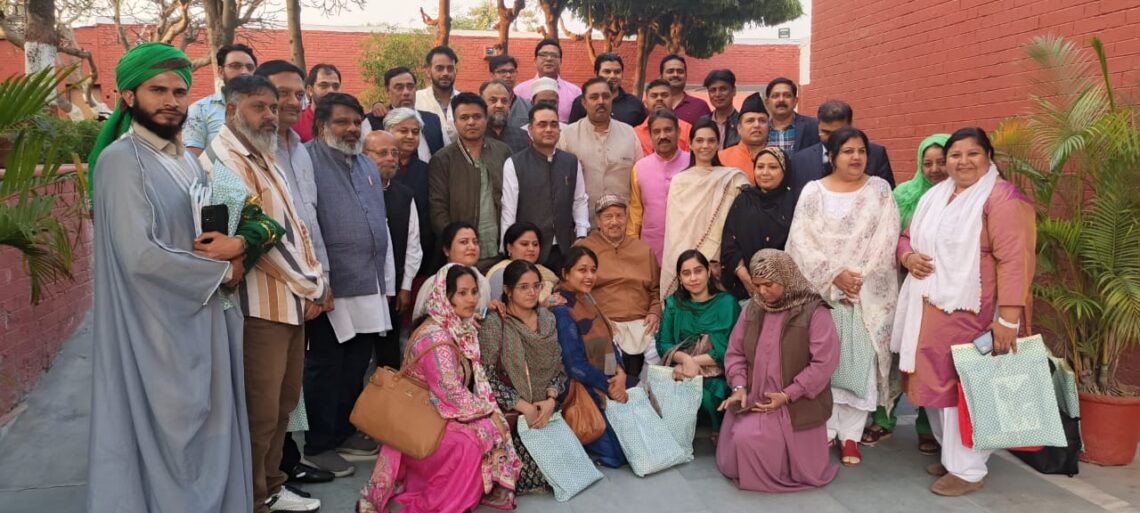
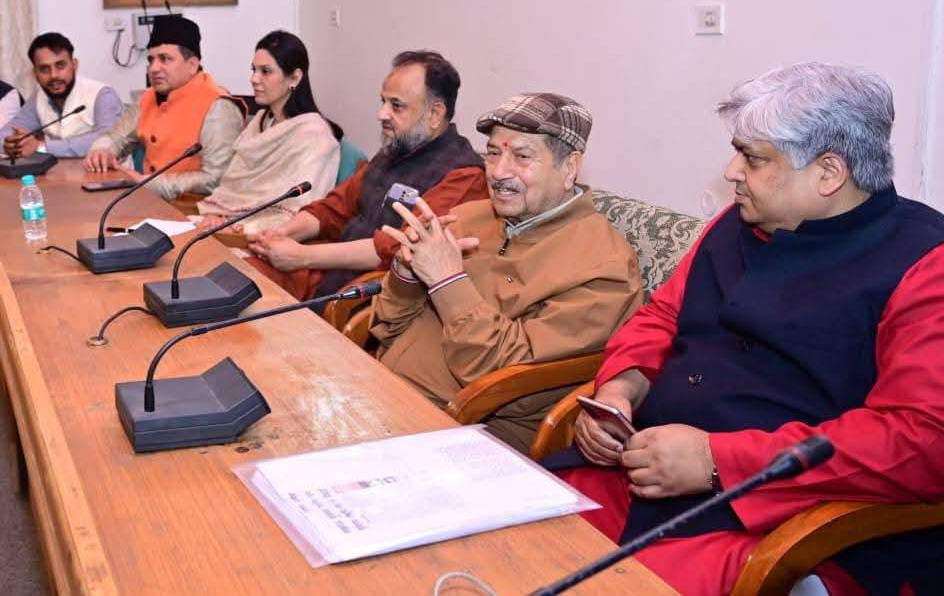
New Delhi. The Muslim Rashtriya Manch (MRM) today celebrated its 24th Foundation Day at a time when India and the world are passing through a difficult phase marked by social, religious, and humanitarian challenges. On this occasion, an important and wide-ranging national meeting was organized at the Manch office in Paharganj, New Delhi, where activists from across the country participated both offline and online. The meeting was chaired by the Manch’s Margdarshak Indresh Kumar.
This gathering emerged as a powerful platform for introspection, open dialogue, and defining the future course, where serious, sensitive, and responsible discussions took place on key national issues as well as international developments.
Nearly 1,000 activists, including all national conveners, conveners and co-conveners of various departments, and state and provincial office-bearers, actively participated in the meeting. A detailed review of the work carried out by the Manch over the past year was conducted, along with in-depth deliberations on the organization’s future direction. The Manch clearly stated that its objective is not limited to organizational expansion alone, but is rooted in playing a positive, constructive, and nation-centric role in the interest of the country, society, and humanity.
Violence Against Minorities in Bangladesh: A Truth That Shames Humanity
The most sensitive and emotionally charged discussion during the meeting focused on the violence against minorities in Bangladesh, particularly the Hindu community. Expressing deep concern, pain, and anger, the Manch stated unequivocally that such violence is unacceptable in any form and constitutes a direct crime against humanity. It was emphasized that targeting people on the basis of religion in a neighboring country not only damages its social fabric but also poses a serious threat to peace and harmony across the region.
A unanimous resolution was passed urging the Government of India to take firm and effective political and diplomatic steps so that adequate pressure is built on the Bangladesh government to ensure the safety of life, property, religious places, and dignity of minorities. The Manch stressed that violence in the name of religion is not the problem of any one country or community; it weakens humanity as a whole. Silence in the face of such atrocities only encourages injustice. Therefore, it is essential to raise one’s voice for humanity and protect minority rights everywhere.
Clear Message Against Religious Extremism and Terrorism: Appeal to Keep the Nation Riot-Free
The meeting also openly addressed the growing menace of religious extremism and hatred within the country. The Manch stated that those who spread hatred are enemies not only of humanity but also of the unity and integrity of the nation. Any insult or disrespect—whether against Prophet Hazrat Muhammad, Jesus Christ, Christianity, or any other faith—was strongly condemned.
Particular concern was expressed over incidents in Madhya Pradesh, including threats to demolish mosques, objectionable remarks against Prophet Muhammad, and incidents targeting the Christian community during Christmas. The Manch said such actions tarnish India’s image globally, and no responsible citizen can tolerate them. People were attracted to follow their own faiths with sincerity, respect all religions, and refrain from using offensive language or behavior against any community. It was reiterated that no religion teaches hatred toward another religion. A strong appeal was also made to stay away from forced conversions and religious fanaticism. The Manch expressed deep concern that much of the world today is burning in hatred and war, calling it a matter of collective shame.
Hope from the Youth: Education, Employment, and a Drug-Free India
Special and serious deliberations were held in the role of the youth. The Manch highlighted that India is a young nation, with nearly half its population being youth, making them the country’s greatest strength and the true foundation of its future. If youth are provided with proper direction, quality education, and dignified employment opportunities, no one can stop India from becoming a global leader.
Consensus was reached on the urgent need to link youth with the resolve for a drug-free India, along with education, employment, and skill development, as substance abuse destroys the energy, thinking, and future of young people. It was noted that Indian youth are making their mark across the world—from America to Australia—through hard work, talent, and integrity, contributing significantly to global progress. This naturally raises the question: what are we doing for our own country, society, and soil?
The Manch made an emotional appeal to the youth to stay away from negative and misleading paths, avoid hatred and violence, and channel their energy into nation-building, social service, and strengthening a self-reliant India. If youth are determined, both the direction and destiny of the nation can be transformed.
Environmental Protection: Our Shared Responsibility Toward Future Generations
The meeting also held serious and sensitive discussions on environmental protection. The Manch stated clearly that safeguarding the environment is not solely the responsibility of governments or institutions, but a moral and humanitarian duty of every citizen. Expressing concern over rising pollution, rapid deforestation, drying water sources, and excessive plastic use, it was warned that failure to change our habits today will impose a heavy burden on future generations.
People were urged to plant more trees, prevent air and water pollution, stop wasting water, and reduce plastic use in daily life. The Manch raised a critical question: what kind of environment are we leaving for our children and future generations—what air they will breathe, what water they will drink, and what kind of life will they live in? It emphasized that today’s decisions, responsibility, or negligence will determine whether the future is safe and healthy or filled with crises. Environmental protection must therefore become part of everyday behavior, not just slogans or formal discussions.
23-Year Journey: The Path of Unity and Humanity
The 24th Foundation Day of the Muslim Rashtriya Manch was not merely a celebration of another year, but a day to reaffirm responsibility toward the nation, society, and humanity. The resolutions passed sent a clear message that the Manch’s path is guided by dialogue, mutual respect, national unity, and human values. The program concluded with the conviction that India’s true strength lies in its diversity, which can be strengthened only through respect, dialogue, and cooperation.
Distinguished Participants
Prominent participants included Mohammad Afzal, Virag Pachpor, Dr. Shahid Akhtar, Girish Juyal, Abu Bakar Naqvi, S. K. Muddeen, Islam Abbas, Syed Raza Hussain Rizvi, Dr. Majid Talikoti, Habib Chaudhary, Reshma Hussain, Dr. Shalini Ali, Shahid Sayeed, Dr. Tahir Hussain, Irfan Ali Pirzada, Hafiz Sabreen, Imran Chaudhary, Mazhir Khan, Shiraz Qureshi, Dr. Keshav Patel, Ashid Khan, Shakir Hussain, Dr. Babli Parveen, Dr. Tasneem Patel, Altamash Bihari, Colonel Tahir Mustafa, Dr. Rehan, Thakur Raja Rais, Dr. Hasan Noori, Tusharkant, Iliyas Ahmad, Faiz Khan, Tahir Shah, Sufi Shah Syed Ziarat Ali, Anjum Ansari, Shahnaz Afzal, Qari Abrar Jamal, Kallu Ansari, Shamim Bano, Dadu Khan, Dr. Shaista, Shafqat Qadri Raja, Dr. Shadab Tabassum, Tauqeer Raza, Fareed Sabri, Dr. Saleem Raj, and many other distinguished personalities.