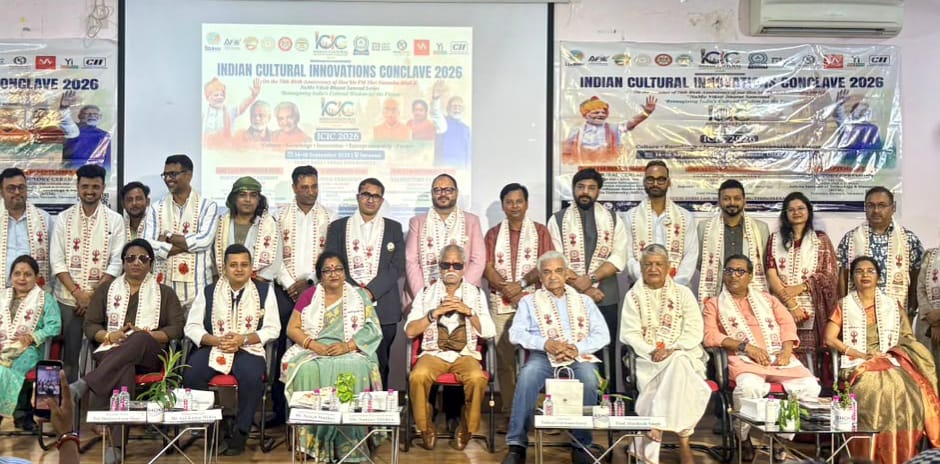
Varanasi/New Delhi, The Centre for Namo Studies (CNMS), as part of its Namo Viksit Bharat Samvad Series, organised the three-day Indian Cultural Innovations Conclave 2026 at the Manaviy Moolya Anusheelan Kendra (Mahamana Auditorium), Bharat Adhyayan Kendra, Banaras Hindu University (BHU), Varanasi. The conclave was organised in collaboration with Ashoka Institute, Banaras Hindu University and associated institutions.
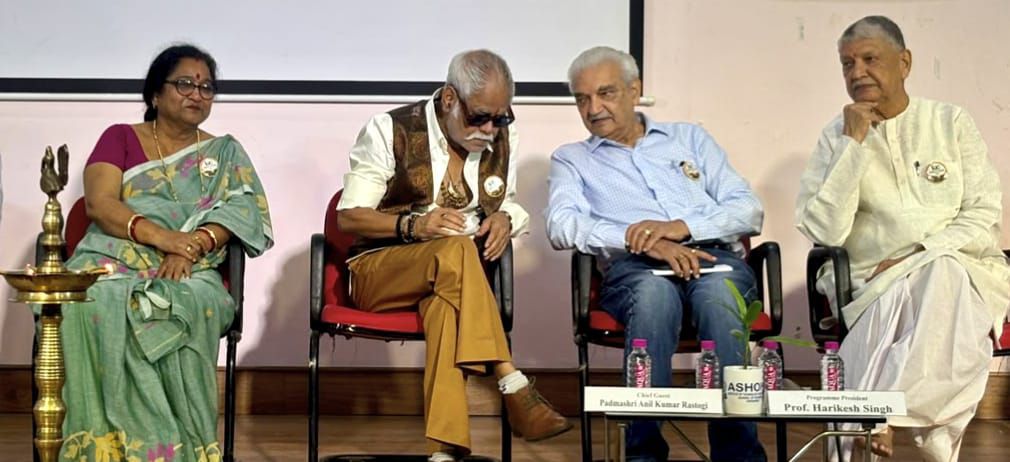
The inaugural ceremony began with Vande Mataram, Manglacharan, the BHU Kulgeet and the lighting of the ceremonial lamp. The programme featured a Kathak dance performance based on Ganesh Vandana by Ms. Shreyasi Mishra and a traditional Yakshagana presentation by Shreyash K. B. from Mangaluru. The dignitaries seated on the dais were welcomed with bouquets, angavastrams and mementoes. Prof. Sharardendu Kumar Tiwari, the event coordinator, welcomed the guests and presented the background of the conclave.
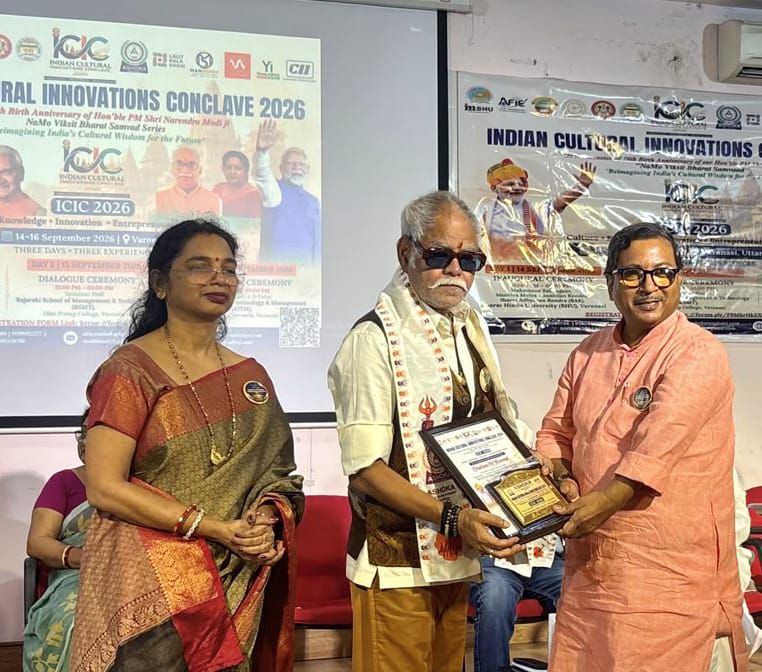
Speaking on the significance of theatre and acting, Padma Shri Anil Kumar Rastogi, the chief guest, described drama as the true mirror of society. He said that theatre plays an important role in shaping an individual’s personality, expression and leadership skills while promoting teamwork. He emphasized that theatre is more practical than theoretical and helps transform an artist into a “one-take actor.” He also expressed concern over the difficulties faced by Hindi theatre in providing adequate livelihoods to theatre artists.
Addressing the gathering, Sanjay Mishra, keynote speaker and renowned actor, encouraged young people to live life with joy, awareness and a connection to the realities around them. He observed that people today are constantly under the pressure of news and information and stressed the importance of paying attention to the realities of their surroundings.
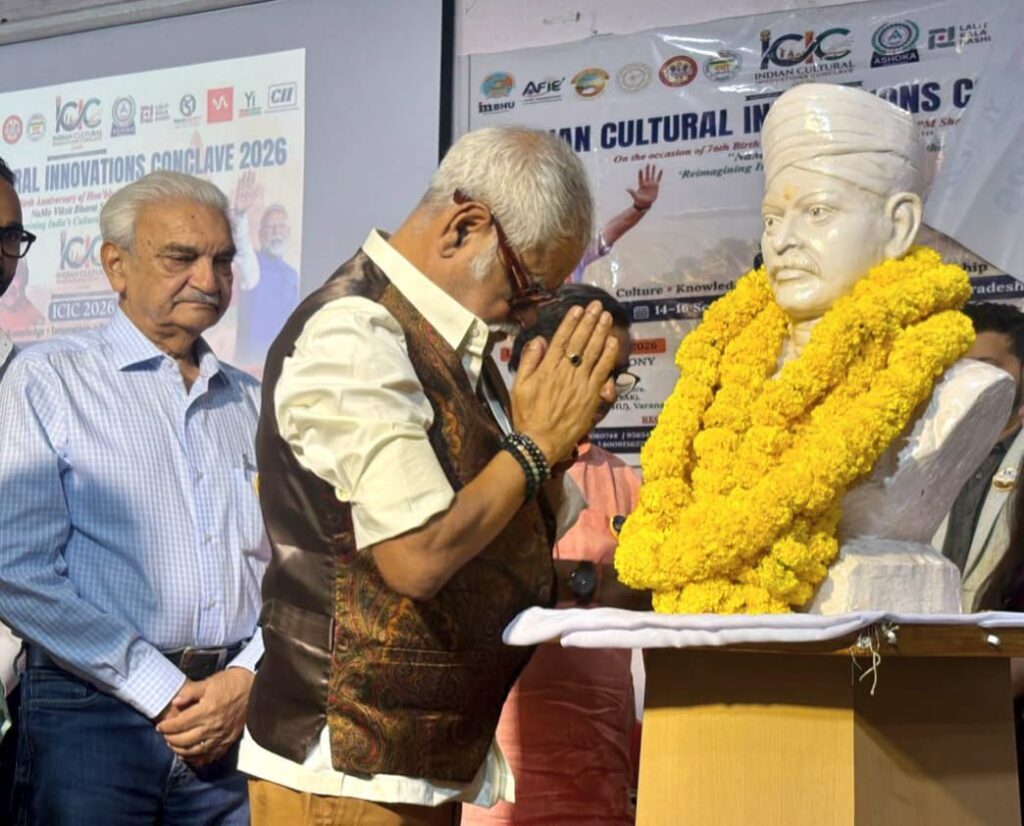
Reflecting on the evolving nature of language and cities, he said that both continue to change with time and cannot be stopped from evolving. He highlighted the distinctive language, culture and character of Banaras. Speaking about the struggles of actors and the importance of remaining focused on the present, he remarked, “I do not think about tomorrow; I only act in the present.” He also shared that his memories of Banaras would be discussed in detail in his forthcoming autobiography.
Dr. Neerja Madhav, distinguished speaker and author, addressed the theme of linguistic identity and the importance of Hindi on the occasion of Hindi Day. She asserted that the struggle for linguistic pride can be strengthened only by speaking one’s own language more widely. Recalling the role of Hindi as a common thread during India’s freedom struggle, she said it remains a matter of consideration why Hindi has still not attained the highest position as the country’s official language.
She acknowledged Hindi’s long tradition of assimilating words from other languages but emphasized the need to maintain a balance so that the influence of other languages does not overshadow the original language. She further noted that India possesses immense talent, but linguistic barriers sometimes prevent deserving individuals from receiving the right opportunities.
Delivering the presidential address, Prof. Harikesh Singh emphasized that possessing an Indian perspective and insight is essential to truly understand Indian culture and the Indian knowledge tradition. He highlighted the importance of understanding India’s cultural heritage through an approach rooted in its own intellectual and civilizational traditions.
Prof. Divya Tanwar, Trustee of the Centre for Namo Studies (CNMS), said that the CNMS is organising a series of programmes in collaboration with various government organisations across different parts of the country to commemorate the twelve-year journey of Prime Minister Narendra Modi’s work and vision. She added that these initiatives are also being held as part of the celebrations marking the Prime Minister’s 76th birthday, highlighting his contributions to India’s development, cultural heritage and the vision of a Viksit Bharat.
At the conclusion of the programme, Dr. Aparna Singh, Member Advisory Council of CNMS expressed gratitude to the dignitaries on the dais, speakers, representatives of various institutions and all participants. The vote of thanks was delivered by Dr. Amit Kumar Pandey.
The event was attended by distinguished guests, including Yash Kumar Jain and Kaushiv Agrawal from CII Young Indians, Dhawal Prakash, Anshuman, Apurva Tiwari from Vyapari Network, Swati Mittal, Dr. Swarn Suman, Dr. Preeti and Dr. Sarika Srivastava, Director of AITM, along with eminent personalities from various fields, participants, research scholars and students.
The three-day national conclave will continue until September 16, 2026, featuring various technical and academic sessions dedicated to in-depth discussions on Indian knowledge traditions, culture and innovation.