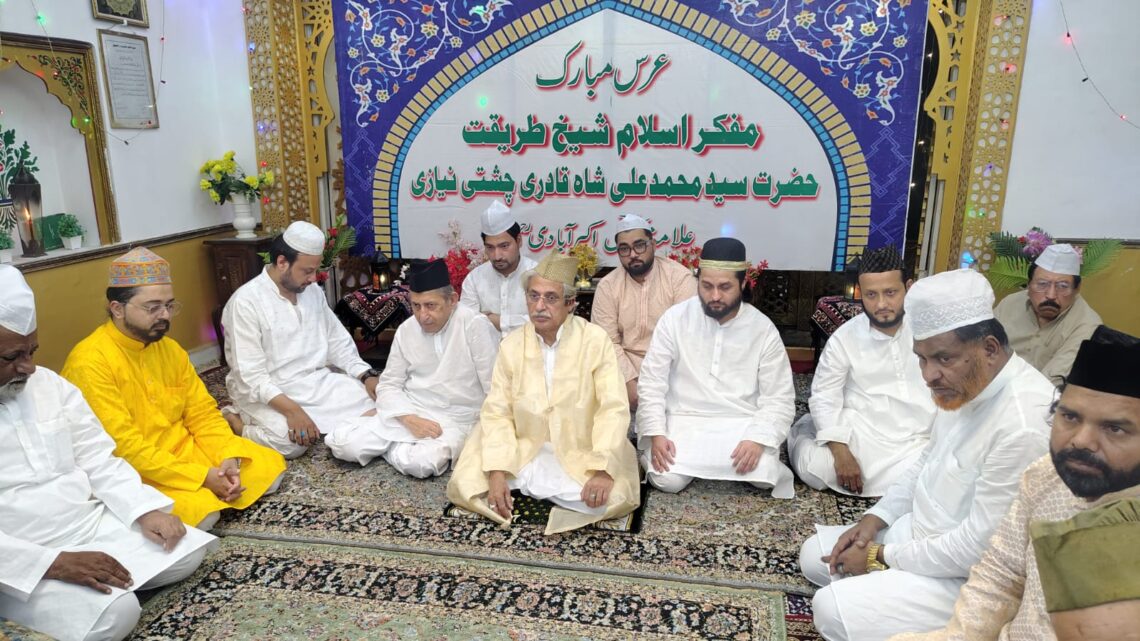
Agra: The annual four-day Urs of the eminent Sufi saint, thinker of Islam, and renowned Urdu scholar Hazrat Allama Syed Mohammad Ali Shah Maykash Akbarabadi was observed with great श्रद्धा (devotion) and spiritual fervor at Khanqah Qadria Niyazia, Meva Katra, Agra, from 9th to 12th Shawwal 1447 AH (corresponding to March 29, 30, 31 and April 1, 2026).
A large number of devotees, disciples, and admirers from across the country and abroad gathered to pay homage and seek spiritual blessings.
Ceremonial Beginning with Chadar Poshi and Milad
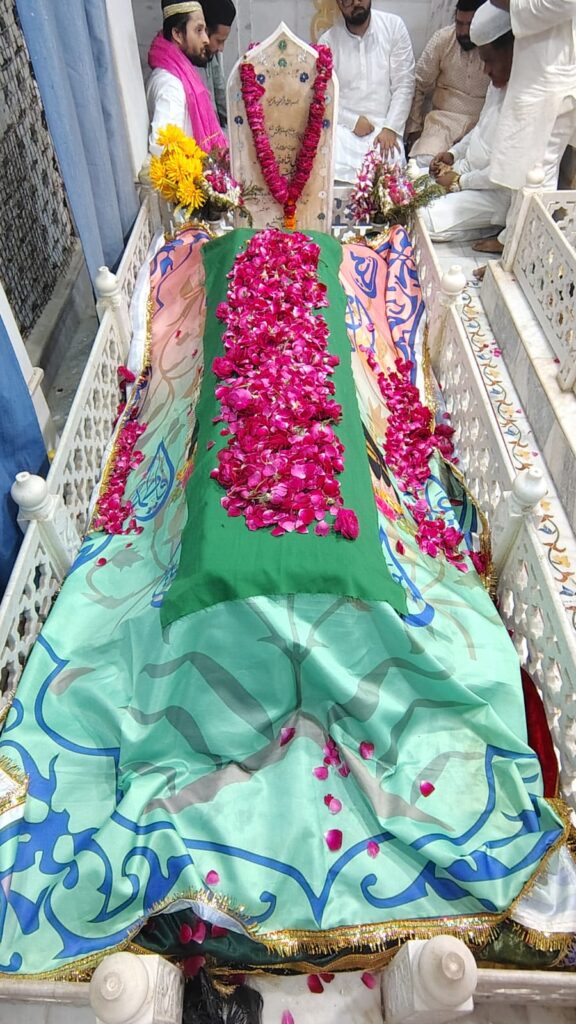
The Urs commenced with the ceremonial offering of a chadar at the shrine of Hazrat Syed Amjad Ali Shah Qadri at Panja Madrasa Shahi, Agra. This was followed by a Milad-un-Nabi gathering held at the Khanqah in the afternoon, where praises of Prophet Muhammad (peace be upon him) were recited.
In the evening, the special ritual of Qul was performed in an atmosphere filled with devotion.
Quran Recitation, Sufi Music and Literary Gathering
On the second day, Quran recitation (Quran Khwani) was organized after the Fajr prayer. Later, a soulful Mehfil-e-Sama (Qawwali session) was held, captivating attendees with Sufi devotional music.
A Naatiya and Manqabati Mushaira (poetic symposium) was also organized at night, where poets presented verses in praise of the Holy Prophet (PBUH) and Sufi saints.
Spiritual Conclusion with Prayers and Rituals
The Urs concluded with the traditional Rang and Salam. Special prayers were offered by the Sajjada Nashin Hazrat Syed Mohammad Ajmal Ali Shah for peace, harmony, and well-being of the nation and the world.
On the 11th of Shawwal, Fateha was offered in the name of Ghaus-e-Azam, and on the 12th Shawwal, a ceremonial Fateha Dastarkhwan was organized after Maghrib prayers in the name of Prophet Muhammad (PBUH), where devotees participated and offered prayers.
A Legacy of Spirituality and Scholarship
Hazrat Allama Syed Mohammad Ali Shah Maykash Akbarabadi was born on March 3, 1902, in Agra. He belonged to a distinguished spiritual family known for its legacy of service, piety, and scholarship spanning nearly four centuries.
He was associated with the Qadri, Chishti, Nizami, and Niyazi Sufi orders and followed the Sunni Hanafi tradition. A firm believer in the philosophy of Wahdat al-Wujud (Unity of Being), he was deeply influenced by the teachings of Ibn Arabi.
Scholar, Poet, and Thinker
Apart from being a revered Sufi saint, Maykash Akbarabadi was a distinguished Urdu poet, critic, and intellectual. His notable works include Mai Kada, Harf-e-Tamanna, Naghma aur Islam, Naqd-e-Iqbal, Shirk wa Tauheed, and Masail-e-Tasawwuf.
His literary contributions were recognized by the Uttar Pradesh Urdu Academy. He passed away on April 25, 1991, in Agra.
Symbol of Ganga-Jamuni Culture
The Khanqah continues to stand as a vibrant symbol of India’s composite Ganga-Jamuni culture, promoting love, tolerance, spirituality, and unity among people of all backgrounds.