Report. S. Muneer
In Aligarh district, Republic Day was celebrated with great enthusiasm and fervor. On this occasion, flag hoisting was carried out and programs were organized in government buildings, educational institutions, and various madrasas.
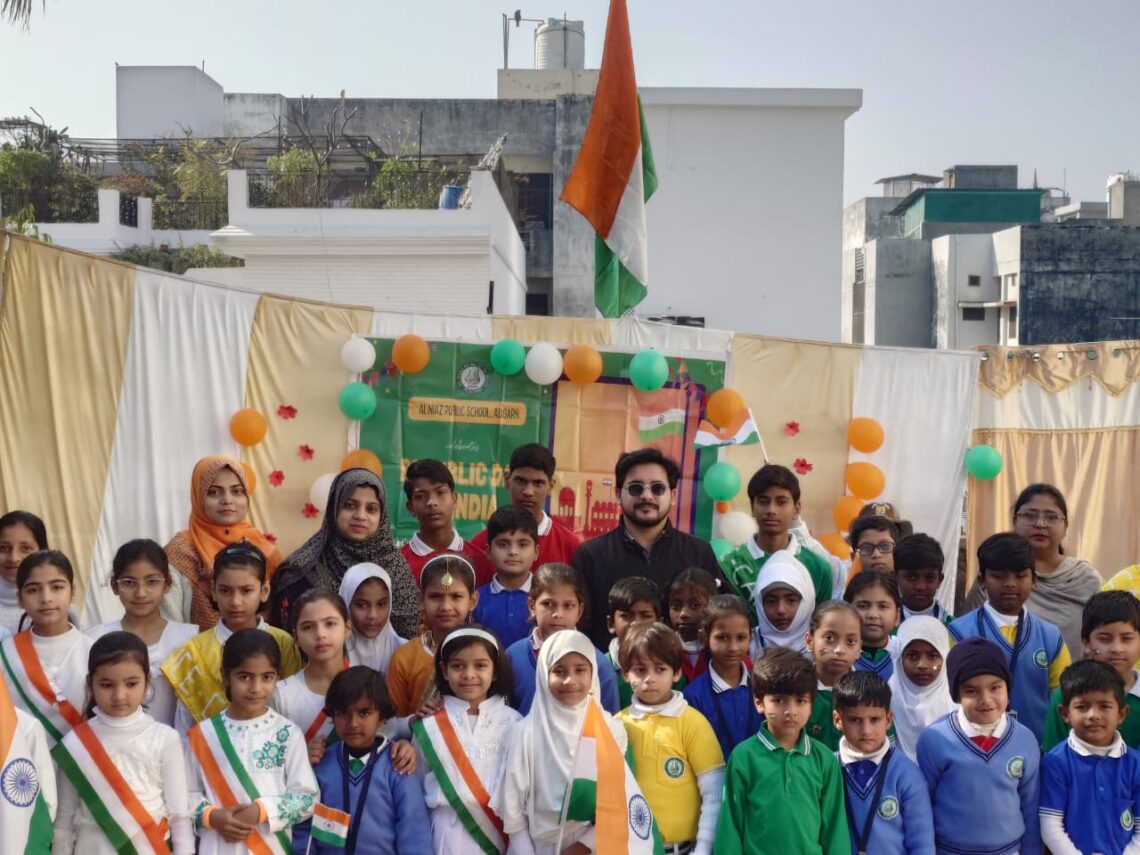
Republic Day was celebrated at Al-Niyaz Public School. On this occasion, Assistant Director Ali Zaman Niazi said that Republic Day is a memorable day for our beloved nation. On this very day, the Constitution of the country came into force, and followers of all religions were granted the right to live, reside, and lead their lives freely in the country.
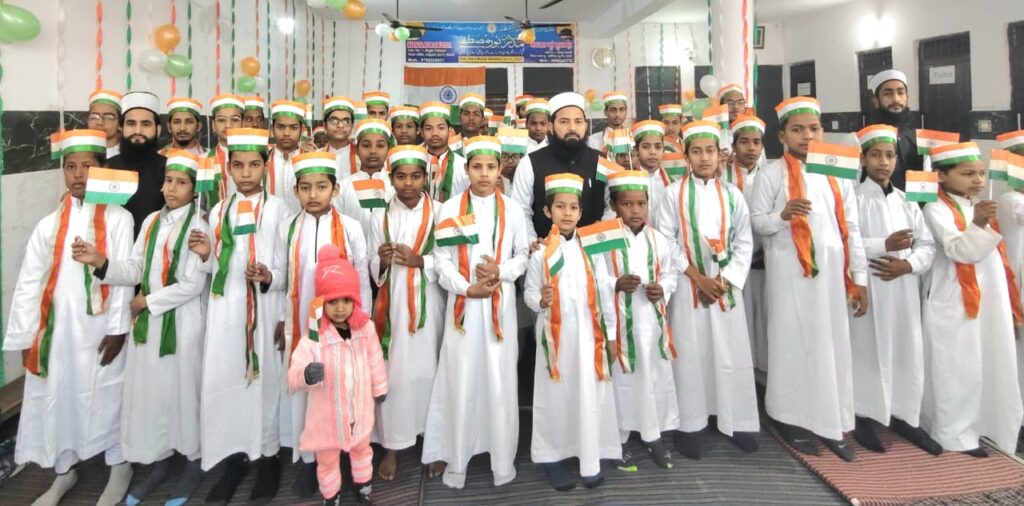
Meanwhile, Teacher In-charge Nafeesa said that our country India became independent on 15 August 1947. Until then, our country, which had been enslaved, emerged on the world map as a free nation. After independence, it became necessary to draft a new Constitution and legal framework for the country. Therefore, for this process, the Constituent Assembly formed a Drafting Committee, whose chairman was Bhim Rao Ambedkar. On 26 November 1949, the Constitution of India was prepared, and it was enforced on 26 January 1950. That is why we celebrate this day as Republic Day. Our Constitution is a balanced, complete, and comprehensive Constitution. It is the longest and most detailed Constitution in the world, containing 395 Articles. This Constitution grants all Indian citizens equal rights and freedom to practice their respective religions, customs, and traditions.
On this occasion, the school’s male and female students presented various cultural programs. Present on the occasion were Ayesha Madam, Kulsoom Madam, Atta Niazi, Hafiz Furqan Niazi, Mazhat Madam, along with students and parents.
On the occasion of Republic Day, a ceremony was organized at Madrasa Faizan Mustafa, Zahra Bagh. The national flag was hoisted by the Madrasa’s Mohtamim, Allama Maulana Syed Jamal Ahmad Sahib Qibla. In his address, he said that Republic Day holds the status of a very important milestone in India’s national journey. On this day, 26 January 1950, the Constitution of the country was implemented. He said that undoubtedly, with the attainment of independence on 9 August 1950, colonial rule in India came to an end, but India’s real transformation in the form of rule based on law, institutional accountability, and the will of the citizens was completed only with the acceptance of the Constitution. Every year on 26 January, we celebrate this constitutional achievement. These celebrations reflect the functioning of democratic institutions and the diversity of the nation. Republic Day celebrations highlight our constitutional ideals in the public sphere. On this occasion, the teachers and students of the madrasa were also present.
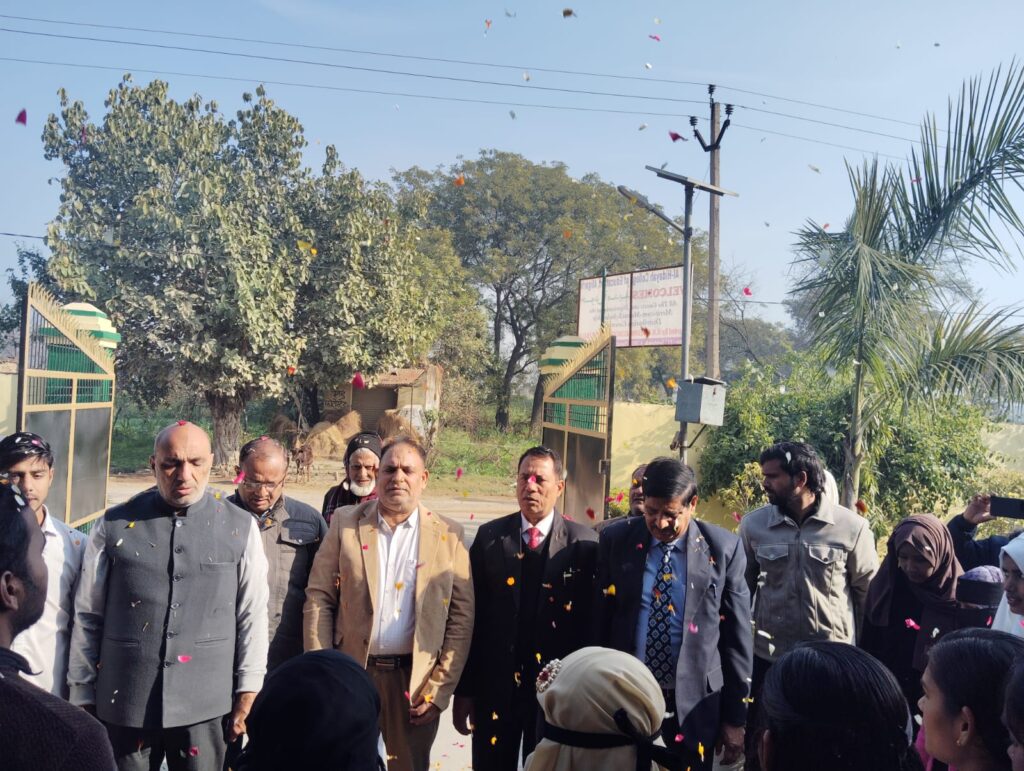
Republic Day was celebrated at Al-Hidayah College of Education. On this occasion, addressing the gathering, the chief guest Professor Aftab Ahmad Siddiqui, a teacher at S.R.K. College, Firozabad, said that in the history of independent India, two days hold immense importance. The first is 15 August, when the country was freed from British oppression. The second is 26 January, when the country became a republic, meaning that its own laws were implemented and enforced by its own people. To frame the country’s laws, a seven-member committee was formed under the chairmanship of Dr. Bhim Rao Ambedkar on 29 August 1947. It took 2 years, 11 months, and 18 days to prepare the present Constitution of the country. On 26 January 1950, this new law was enforced, and the first Republic Day was celebrated.
The Vice President of the Managing Committee of Al-Hidayah College of Education, Khalid Masood, said that after independence, the biggest question that arose was what kind of Constitution the country should have. The Indian democratic system is one of the best systems, in which people of different ideologies, thoughts, cultures, and civilizations reside, and this diversity and colorfulness is its identity. On 26 January, in support of this equal Constitution, and to take pride in the democracy of this great country of India despite being multi-religious, Republic Day and the Festival of Democracy are celebrated, and the martyrs of the nation and the founders and framers of the Constitution are paid the best tribute. On this occasion, Kanwar Asif also addressed the gathering. Teachers and students of the college were present.
Republic Day was celebrated at Madrasa Noor Mustafa, Nagla Patwari, in which a large number of religious scholars, teachers, students, and local dignitaries participated. On this occasion, the Mohtamim of Madrasa Noor Mustafa, Qari Muhammad Tariq Raza, said in his presidential address that 26 January reminds us that our country is founded on a strong Constitution, which gives us the message of peace, justice, and equality.Qari Muhammad Akram, Principal of Madrasa Noor Mustafa, said in his address that education is the foundation of the progress of any nation.Maulana Noor-ul-Huda, teacher at Madrasa Noor Mustafa, said that knowledge grants consciousness to a human being, and consciousness is the identity of a good citizen.Maulana Muhammad Shahbaz Ahmad Markazi said that the Constitution of India grants equal rights to all citizens.Hafiz Muhammad Sarfaraz Ahmad and Syed Maqsood also addressed the gathering.Present on the occasion were Zahid Ali Noori, Haji Hamid Khan, Mujeeb Khan, Shakir, Hafiz Muhammad Sameer, Hafiz Muhammad Waris, Hafiz Muhammad Aaqil, Hafiz Yunus Raza, Hafiz Muhammad Faiz, and Hafiz Zaid Raza.
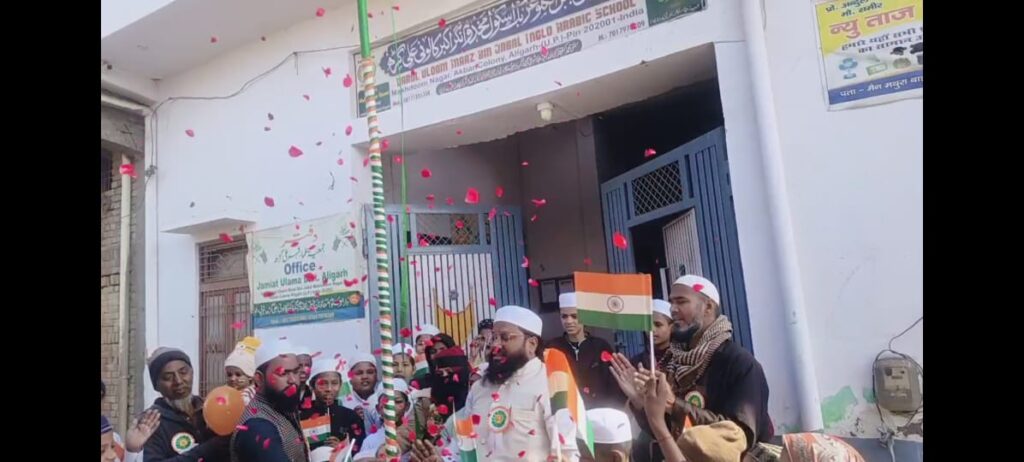
Republic Day celebrations were organized at Darul Uloom Muaz bin Jabal Education and Welfare Foundation, Makhdoom Nagar. Addressing the gathering, Mufti Muhammad Akbar Qasmi said that with the decline of the Mughal Empire, the British rose to power. The British wrote a long tale of oppression and brutality, every page of which is soaked in the blood of Indians. People from every section of society were among those who, filled with the spirit of freedom and with shrouds tied on their heads, fearlessly jumped into the fire of colonial oppression for the survival of the nation and their culture. Just as Muslims played an active role and made sacrifices in achieving independence, they also played their role in the process of Constitution-making. Prominent individuals involved in the drafting of the Constitution included Maulana Abul Kalam Azad, Maulana Hasrat Mohani, Rafi Ahmad Kidwai, Begum Aziz Rasul, along with several other Muslim leaders. In such circumstances, it was necessary that after independence, our country should become a democratic nation and set an example of unity in diversity.
He said that under the Constitution of India, our country is a sovereign, socialist, secular, and democratic nation. The government has no religion; the government will be formed by the will of the people, and all Indians have been given the right to economic equality. He said that it is important for citizens to gain knowledge of constitutional rights and laws so that they may be protected. Political awareness is necessary so that violations of fundamental rights can be prevented. Efforts should be made at various levels to create awareness about the protection of constitutional rights. Minorities, especially Muslims, should gain knowledge and awareness of fundamental and constitutional rights so that they can play their role in protecting these rights. India is a multi-religious and multi-lingual country; therefore, efforts should be made to promote religious tolerance and national unity. He said that as Indian citizens, we should strive to make our country an ideal nation and move forward on the path of progress.
He further said that these spring-like celebrations of democracy did not come easily. The struggle to bring a democratic system to India and to end British occupation was very long. The journey of freedom was not easy; the story of independence is deeply painful. During British rule, clouds of terror, brutality, and oppression had enveloped the entire atmosphere. National freedom and religious identity were at their mercy. In such horrific and turbulent conditions, Shah Abdul Aziz Dehlvi, son of Shah Waliullah Muhaddith, courageously issued a fatwa declaring that India had become enslaved; therefore, jihad against British domination had become obligatory upon every Indian, irrespective of religion or community. In light of this fatwa, the scholars stood up. Syed Ahmad Shaheed and Shah Ismail Shaheed (رحمة الله) moved forward, traveled across the country, awakened the nation, and gradually an environment against the British began to form. British atrocities were not hidden from anyone. A fire of hatred against the British was ignited in the hearts of Indians. Then, in 1857, when waves of rebellion erupted everywhere, most of the revolutionary soldiers headed towards Delhi. However, the rebellion failed in the face of the organized British army. On 20 September 1857, the British captured the Red Fort and arrested the last lamp of the Mughal Empire, Bahadur Shah, and exiled him to Rangoon (Burma). After the failure of the 1857 uprising, which the British termed a mutiny, the British unleashed severe oppression. Since Muslim masses and scholars were in the front ranks, the retaliation was largely directed against them. Clerics were equated with rebellion, and the series of killings and hangings continued for many days. Tremendous sacrifices were made to free the nation. A long tale of oppression and brutality was written, every page of which is soaked in the blood of Indians, especially Muslims. Muslims were at the forefront among those who, filled with the spirit of freedom and with shrouds tied on their heads, fearlessly plunged into the fire of colonial oppression for the survival of the nation and their culture. On this occasion, the teachers and students of the madrasa were present