Only Positive Engagement with India Can Bring Lasting Peace in Bangladesh – Muslim Rashtriya Manch
Book “Bhartiya Musalmanon Ki Gaurav Gathayen” Released at Haryana Bhavan
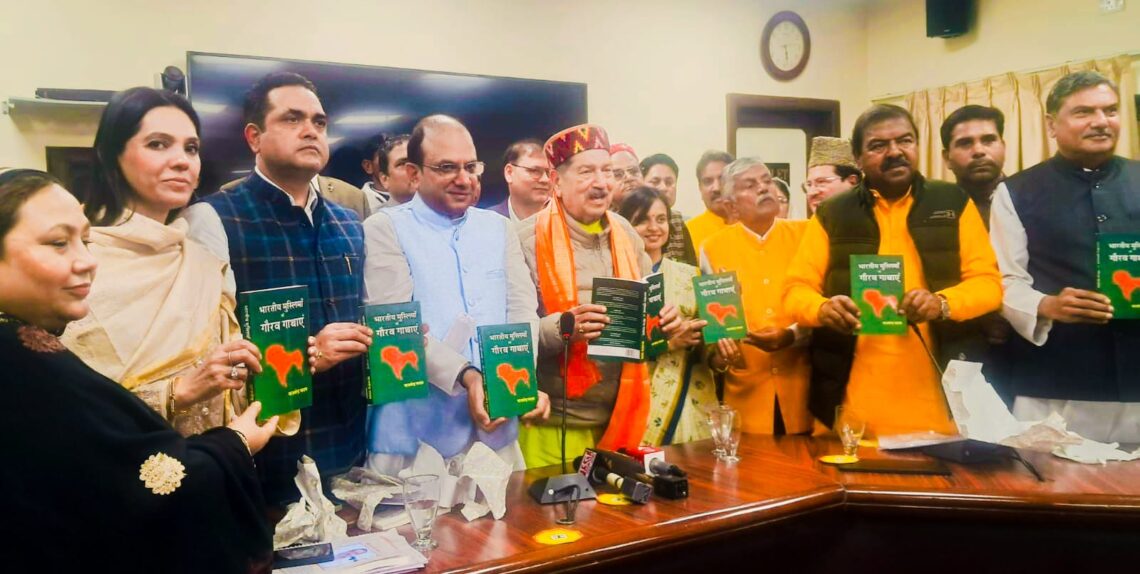
New Delhi, : The Muslim Rashtriya Manch (MRM) released the book “Bhartiya Musalmanon Ki Gaurav Gathayen” at Haryana Bhavan. Presiding over the program, MRM’s mentor Indresh Kumar took a clear stand on the Vande Mataram controversy and the situation in Bangladesh.
The ceremony began with a collective rendition of Vande Mataram, underlining the nationalist orientation of the platform. Indresh Kumar said, “Millions of Muslims across the country proudly sing Vande Mataram and consider it an integral part of their Indian identity. Opposition to it is driven by narrow vote bank politics. The national song embodies the spirit of India’s culture, history, and freedom struggle. Rejecting it means distancing oneself from the shared heritage that has united the nation. The nation comes first, politics later.”
Speaking on Bangladesh, he stated that historically its cultural roots are connected to Indian civilization. Before 1947, people were Hindustani; despite political changes, the cultural foundation still exists. For regional peace, India–Bangladesh cooperation is essential. Positive relations with India alone can ensure lasting peace there.
The book “Bhartiya Musalmanon Ki Gaurav Gathayen,” written by Yajvendra Yadav, was described by the forum as a document of India’s shared national heritage. The book highlights the contributions of Indian Muslims in the freedom movement, armed forces, education, science, literature, and social service. Speakers said the work dispels divisive misconceptions and demonstrates that Indian Muslims have played a vital role in the country’s unity, integrity, and progress.
Dr. Shahid Akhtar said that India’s strength lies in its diversity and commitment to the Constitution. Education is the strongest tool for social empowerment and can counter extremism and ideological conflict. Dissent is part of democracy, but turning national symbols into political controversies goes against national interest.
Dr. Shalini Ali described coexistence and mutual respect as the essence of India’s identity. She expressed deep concern over attacks on minority Hindus in Bangladesh and said that violations of innocent people’s rights anywhere must be strongly opposed. A uniform approach to human rights is essential.
Before the book release, MRM held a National Executive meeting, where it was decided to intensify public awareness campaigns, harmony yatras, youth dialogues, and discussions based on nationalist values. Around 150 office-bearers from across the country participated in the meeting.
The message from Haryana Bhavan was clear: there can be no compromise on India’s unity, integrity, and cultural identity. Differences of opinion are part of democracy, but using national symbols as political weapons is unacceptable. MRM reiterated—“Nation First” is not merely a slogan, but a national resolve.
Prominent attendees included: Dr. Shahid Akhtar, Dr. Shalini Ali, educationist Firoz Bakht Ahmed, Mohammad Afzal, Girish Juyal, Abu Bakar Naqvi, Syed Raza Hussain Rizvi, Shahid Sayeed, Imran Chaudhary, Hafiz Sabrin, Reshma Hussain, S.K. Mudeen, and other distinguished citizens.